Cute Retro Robot Illustration
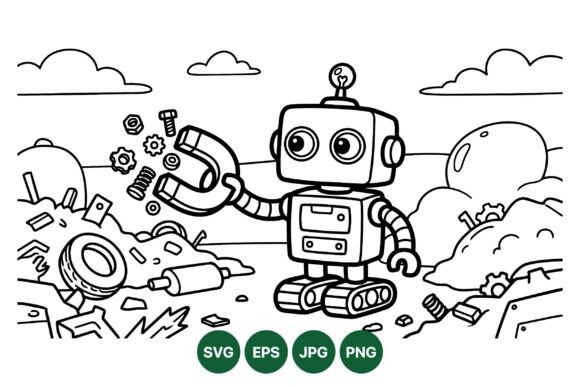
When I am scouting for a new embroidery file to add to my collection, I am rarely looking for just another generic clipart image. I am looking for character, clarity, and commercial viability. Recently, I pulled up the Cute Retro Robot Illustration, described as a black and white line art vector where a friendly robot collects bolts, springs, and gears from a junkyard. At first glance, it looks like a simple graphic, but when you start thinking about how this translates to thread, the potential becomes quite interesting. It sits squarely in the intersection of playful nostalgia and industrial whimsy, making it a strong candidate for specific niches in the handmade market.
First Impressions and Visual Personality
The immediate draw of this design is its mood. It is not aggressive or overly complex; it is friendly, playful, and distinctly retro. The concept of a robot gathering scrap metal—bolts, springs, and gears—gives it a narrative quality that standard geometric robots lack. For an illustrations category item, this adds depth. It feels like a scene rather than just a logo. The black and white line art style is particularly smart for embroidery because it relies on clear boundaries and distinct shapes. This is crucial because we are translating pixels into stitches. If the original vector has muddy lines or overlapping elements that don’t separate well, the final finished product will look cluttered. In this case, the "junkyard" theme provides natural separation between the robot figure and the scattered mechanical parts, which helps the eye follow the composition without getting lost in stitch noise.
Real-World Application: From Screen to Stitch
I often imagine how a design will perform before I even load it into my machine. Let’s take a practical scenario: preparing a custom embroidered tote bag for a local craft fair or an Etsy seller listing. A canvas tote is a durable, neutral background that allows the embroidery to stand out. If I were to place this Cute Retro Robot Illustration on a beige or cream-colored canvas bag, the contrast would be excellent. The robot could serve as the central focal point, perhaps with the scattered gears and springs filling the negative space around it. This layout works beautifully for a tote bag design because it fills the available hoop area without feeling cramped.
However, the application doesn’t stop at bags. This design has significant versatility across different handmade products. Consider a baby onesie or a nursery pillow cover. The "cute" aspect of the robot makes it suitable for children’s themes. Parents often look for items that are both educational and decorative. A robot collecting gears can subtly suggest engineering, building, or recycling, which appeals to modern parenting trends. In this context, using lighter thread colors for the robot’s body against a soft pastel fabric could create a gentle, inviting aesthetic. Alternatively, for a more gender-neutral approach, sticking to monochrome threads on grey heather fabric would give it a modern, minimalist vibe.
Another strong use case is apparel decoration. A sweatshirt embroidery project benefits from bold, graphic designs. This robot illustration has enough visual weight to hold its own on a heavy cotton blend hoodie. It could easily become a statement piece for a creative entrepreneur who wants to wear something unique. Similarly, for an embroidered patch intended for denim jackets or backpacks, the clean line art translates well to applique or dense satin stitching. The mechanical details like springs and gears offer great opportunities for texture variation, allowing the designer to mix different stitch types to keep the viewer engaged.
Where Caution Is Required
While the design has charm, no vector is perfect for every surface. There are specific scenarios where this Cute Retro Robot Illustration might struggle. First, consider small hoop sizes. If you attempt to digitize or embroider this entire scene in a 4x4 inch hoop, the individual gears and bolts may become too small to stitch clearly. Tiny details often get lost in the fabric weave or merge together if the stitch density is not managed carefully. In such cases, it is better to crop the design to focus solely on the robot’s face or upper body.
Fabric choice is equally critical. Textured fabrics, such as thick terry cloth or bouclé, can obscure fine line work. If you are working with thin or stretchy knit fabrics, the structural integrity of the robot’s outline might warp during stitching unless a proper stabilizer is used. Dark fabrics present another challenge; since the source is black and white line art, you will need to ensure your thread colors provide sufficient contrast. A dark navy thread on a black shirt will disappear, so testing on scrap fabric is non-negotiable. Additionally, curved surfaces like caps or sleeves can distort straight lines, potentially making the robot look slightly slanted. Careful hooping techniques and possibly a tear-away stabilizer underneath can mitigate this, but it requires skill.
Technical Notes for the Designer
As a professional reviewer, I must emphasize the importance of technical preparation. Before committing to a large production run or selling a commercial embroidery item, you must test the design thoroughly. Start by running a mockup in black and white. This helps you evaluate the balance of positive and negative space without the distraction of color. Next, inspect the small details. Are the gears distinct? Can the magnet arm be clearly defined? If the original vector lacks sufficient resolution, you may need to simplify the design during the digitizing process.
Thread selection plays a huge role in the final appeal. Since the design is based on line art, using high-contrast threads will enhance the definition. For a classic look, black thread on white fabric is timeless. For a softer feel, try charcoal grey on light grey. You might also experiment with metallic threads for the springs and gears to add a subtle shine that mimics real metal, elevating the perceived value of the handmade product. Always check your stitch density; if the fill areas are too dense, the fabric may pucker. If they are too sparse, the underlying material may show through, ruining the clean line-art effect.
Final Verdict on Value and Engagement
Ultimately, the Cute Retro Robot Illustration offers strong visual appeal and high giftability. Its playful nature makes it an excellent choice for personalized gifts, holiday embroidery projects, or boutique branding. Customers respond well to designs that tell a story, and a robot collecting junk has a charming narrative that stands out in a crowded marketplace. It supports brand consistency for shops that focus on quirky, nostalgic, or tech-inspired themes. Whether you are creating digital product previews, printable mockups, or physical goods, this design asset has the flexibility to engage buyers and drive interest.
For craft business owners, this design is a solid addition to your library. It bridges the gap between cute and cool, appealing to a wide demographic. Just remember to respect licensing terms before selling finished items or digital derivatives. Confirm whether the purchase includes commercial rights for embroidery outputs. With careful execution, proper stabilization, and thoughtful thread choices, this illustration can transform from a simple graphic into a profitable, professional-grade embroidery project that customers will love.