Vintage Lantern Clipart Trio Review
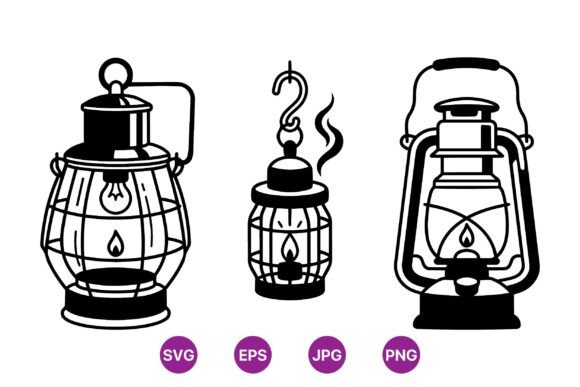
When I sit down to review a new digital asset for my embroidery studio, I am rarely looking at just pixels on a screen. I am visualizing thread tension, fabric grain, and the final hand-feel of a product that will eventually leave my shop or enter a client’s home. Recently, I had the opportunity to evaluate a Vintage Lantern Clipart Trio, a set of three black and white vector illustrations featuring retro-style lanterns with distinct flame types enclosed in protective metal cages. As an illustrator and graphic designer who frequently bridges the gap between digital art and tangible textile work, I wanted to see how this specific Illustrations category entry translates into a functional Graphics asset for real-world application.
First Impressions: Mood and Visual Personality
The immediate appeal of this design trio lies in its cohesive aesthetic. The vintage style is not merely a filter applied to modern shapes; it feels rooted in a specific era of craftsmanship. The protective metal cages surrounding the flames provide a strong structural element, while the varying flame types add subtle narrative diversity across the three pieces. In terms of mood, these lanterns evoke warmth, nostalgia, and quiet guidance. They are perfect for creating a cozy atmosphere, whether that be in a rustic nursery, a boutique hotel lobby, or a handmade holiday gift.
From a pure design standpoint, the vector art style ensures clean lines and scalable resolution, which is crucial when preparing files for digitization. However, the transition from vector to stitch is where many designs stumble. These lanterns possess enough negative space and clear geometric boundaries to allow for confident stitching decisions. They do not rely on intricate shading or complex gradients, which means they are inherently forgiving for both beginner digitizers and experienced professionals looking for quick, reliable results.
Real-World Application: From Screen to Stitch
I recently considered using this Vintage Lantern Clipart Trio for a custom order involving embroidered tote bags and sweatshirts for a local craft fair. The scenario was specific: a series of autumn-themed accessories aimed at young professionals and creative entrepreneurs. The lantern motif fit perfectly with the seasonal transition, symbolizing light during the darker months.
In practice, this embroidery project shines on structured fabrics. For the tote bag design, I envisioned the lanterns placed centrally on a heavy canvas bag. The bold outlines of the metal cages would hold up well against the textured weave of the canvas, providing a crisp contrast that reads clearly even from a distance. Similarly, for sweatshirt embroidery, the trio could be arranged as a vertical stack on the back yoke or a horizontal line across the chest. The black and white nature of the original art allows for immense flexibility in thread colors; you could use classic black thread on cream fabric for a stark, modern look, or opt for gold and silver metallic threads to elevate the piece for a personalized gift.
Beyond apparel, these designs are versatile enough for home decor. I can easily see them translated into apron designs for kitchen use, or perhaps stitched onto pillow covers for a living room accent. The embroidered patch potential is also high; the contained nature of the cage design makes it ideal for a circular or square patch format, suitable for denim jackets or beanies. For an Etsy seller looking to expand their craft business inventory, this trio offers multiple product variations from a single purchase, maximizing the value of your design assets.
Technical Considerations and Stitch Strategy
While the visual appeal is strong, any seasoned designer knows that aesthetics must meet technical feasibility. When evaluating this machine embroidery design concept, several factors come into play regarding stitch density and detail level. The protective cages feature thin vertical and horizontal bars. If digitized with too much stitch density, these bars may merge together, losing their delicate appearance. Conversely, if the density is too low, the structure may feel flimsy on the finished product.
I recommend approaching the lantern frames with a combination of satin stitches for the outer borders and running stitches or fine fill stitches for the internal gridwork. This technique preserves the integrity of the metal cage look without overwhelming the fabric. For the flame elements, a lighter touch is required. Using a mix of satin stitches for the core and running stitches for the flickering edges can create a dynamic, lifelike effect. It is essential to check the hoop size compatibility before starting; if the design is intended for a small hoop, ensure that the finest details remain legible and do not become lost in the stitching process.
Another critical aspect is the choice of stabilizer. Given the structured nature of the lanterns, a cut-away stabilizer is often preferable for woven fabrics like cotton or linen to prevent puckering over time, especially for items that will undergo frequent washing, such as kitchen towels or tea towels. For stretchy fabrics like jersey knits used in baby clothes or t-shirts, a tear-away or wash-away stabilizer might be necessary to maintain comfort and drape, though extra care must be taken to support the dense areas of the design.
Where to Use Carefully
Not every surface is created equal, and there are specific scenarios where this design requires caution. While the lanterns are robust in shape, attempting to stitch them on highly textured fabrics like bouclé or thick chenille can obscure the fine details of the metal cages. Similarly, on dark fabrics, using only black thread will result in a design that is invisible or barely perceptible unless you utilize a contrasting underlay or a different thread color entirely.
Curved surfaces, such as baseball caps or curved garment seams, present another challenge. The rigid geometry of the lanterns may distort if not properly stabilized and stretched during the hooping process. It is advisable to test the design on scrap fabric that mimics the texture and stretch of your final material. Additionally, if you plan to include tiny lettering alongside the lanterns, be mindful of the total stitch count and spacing to avoid a cluttered appearance that compromises readability.
Final Verdict for Designers and Sellers
The Vintage Lantern Clipart Trio is a thoughtful, versatile addition to any designer’s library. Its strength lies in its simplicity and adaptability. It does not try to be overly complex; instead, it offers a solid foundation upon which you can build a variety of commercial embroidery products. Whether you are creating holiday embroidery collections, expanding your small shop product line, or designing unique digital product previews for mockups, this trio delivers professional-grade visual appeal.
For those looking to enhance their brand consistency, the retro aesthetic pairs well with other vintage-inspired motifs, allowing for cohesive collections. It is important to remember that while the source is a vector illustration, the final finished product depends heavily on your digitization skills and material choices. Always confirm licensing terms before selling finished items or distributing digital embroidery files. By testing thoroughly and paying attention to stitch details, this lantern trio can become a staple in your repertoire, helping you create memorable, high-quality handmade products that resonate with customers.