Retro Microphone Vector Clipart Review
When I sit down to evaluate a new design asset for my embroidery studio, I am rarely looking for just "pretty." I am looking for viability. Can this actually be stitched? Will it hold up on a garment that gets washed weekly? Does it translate from a flat screen into three-dimensional thread without losing its soul? Today, I am putting Retro Microphone Vector Clipart through that exact wringer. As an Illustrations and Graphics product, it promises a minimalist aesthetic, but as an embroidery designer, I need to know if minimalism translates to clarity under the needle.
First Impressions: The Mood of Minimalist Audio
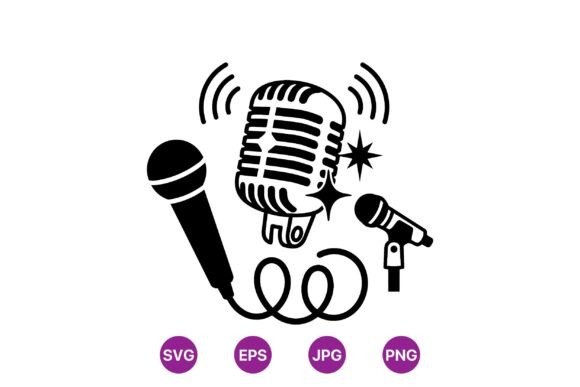
The moment you open the ZIP file containing this machine embroidery design, the first thing that strikes you is the clean, uncluttered composition. We are dealing with a classic trio of microphone styles: a vintage ribbon mic, a handheld dynamic style, and perhaps a condenser shape, all accompanied by symbolic sound waves and a coiled cable. In the world of vector art, this is a strong visual statement. It evokes nostalgia, creativity, and the tangible history of music production.
For the Etsy seller or the small shop product owner, this theme is gold. It speaks directly to musicians, podcasters, audio engineers, and anyone who appreciates analog warmth in a digital world. The black-and-white nature of the source vector suggests high contrast, which is generally good news for digitizing. However, the challenge lies in how those distinct shapes—especially the thin lines of the sound waves and the coil of the cable—will behave when converted into thread. It feels like a design that belongs in a home studio, a creative workspace, or a musician’s wardrobe. It is not just a clipart; it is a narrative about sound and expression.
Real-World Application: Where This Design Shines
I recently considered using this embroidery project concept for a custom order. The client wanted a personalized gift for a brother who runs a local podcast. My mind immediately went to a heavy cotton canvas tote bag design. Why? Because the structure of a tote bag provides a stable, flat surface that can handle the varying stitch densities of a multi-element design like this.
Imagine a sweatshirt embroidery piece placed over the heart. The retro microphone becomes a badge of identity. For the handmade product market, this works exceptionally well on apparel. It fits the current trend of "creative professional" aesthetics. It is sophisticated enough for a boutique branding item but fun enough for a holiday embroidery gift. I also see potential in a custom apparel context where the design is scaled up slightly to fill a chest pocket area, creating a subtle yet recognizable logo-like effect.
Beyond apparel, this embroidery file has strong potential for decor. A small, centered placement on a kitchen towel could add a quirky touch to a chef’s station, while a larger version on a pillow cover could serve as striking nursery decor for a child whose parents are in the arts. The versatility here is what makes it a valuable addition to your design assets.
The Technical Reality: Stitching Challenges and Solutions
However, we must address the elephant in the room: the details. The description mentions "symbolic sound waves" and a "coil cable." In vector land, these are crisp lines. In embroidery, they are risks. If these elements are digitized with too much stitch density, the fabric will pucker, and the fine lines will merge into a muddy blob. If they are too sparse, they may look jagged or broken after washing.
This is why testing is non-negotiable. You cannot simply slap this digital embroidery file onto a final piece of fabric without a preliminary run. I recommend starting with a scrap of the same fabric type you plan to use. If you are working with a textured fabric like denim or a slubby linen, the background texture might compete with the delicate sound waves, causing them to disappear. Conversely, on a smooth cotton twill, the contrast should pop beautifully.
Pay close attention to the hoop size. While this is a relatively compact design, the aspect ratio matters. If you try to squeeze this into a hoop that is too small, you risk distorting the proportions of the microphones. Ensure the digitizer has allowed enough space between the elements so that the satin stitches do not collide. The coil cable, in particular, needs breathing room. If it is too tight, it will look like a tangled mess rather than a sleek accessory.
Fabric and Thread Considerations
Since the source is black and white, you have freedom in thread selection, but contrast is king. On dark fabrics, you will likely need a white or light-colored underlay and top thread to ensure the black vector elements stand out. If you are stitching on light fabric, a black thread choice will give you that sharp, graphic look that mimics the original vector. Avoid low-contrast combinations, such as charcoal thread on grey fabric, as the subtlety of the retro style will be lost.
Also, consider the stabilizer. For a design with both solid shapes (the microphone bodies) and linear details (the waves), a cut-away stabilizer is often safer than a tear-away, especially if the final product will undergo frequent washing. This ensures the integrity of the finished product remains intact over time.
Who Should Use This Design?
This commercial embroidery asset is ideal for the craft business owner who wants to tap into the music and podcasting niche without licensing expensive artist artwork. It allows for quick turnaround on personalized items. It is perfect for personalized gifts such as embroidered patches for guitar cases, laptop sleeves, or beanies.
It is less suitable for extremely small applications, such as a tiny logo on a sock or a delicate detail on a baby onesie where visibility is key. The embroidered patch application is probably the strongest use case, allowing you to create a standalone icon that can be ironed or sewn onto various goods. It adds a layer of professionalism and thematic consistency that buyers appreciate.
Final Verdict: A Strong Contender for Creative Studios
Retro Microphone Vector Clipart is more than just a pretty picture; it is a functional tool for designers who understand the nuances of thread and fabric. It captures a specific mood—vintage, authentic, and creative—that resonates with a wide audience. While it requires careful digitization attention regarding the finer details like sound waves and cables, the payoff in terms of visual appeal and customer engagement is significant.
Before adding this to your library, remember to check the specific license terms. Even though it is a graphic asset, commercial use rights vary. Confirm whether you can sell finished physical items made from it. Assuming the licensing permits it, this design offers excellent value for Etsy sellers and small business owners looking to expand their catalog with trendy, meaningful imagery. Test it thoroughly, respect the stitch limits, and you will find that this retro icon brings a timeless quality to your modern handmade products.